
Winning in an Attention Economy That Rewards Bad Behavior
Plus: New Episode of the SoulTech with Cynthia Podcast with Spiritual Leader Masati
Cynthia L Elliott
3x Best-Selling Author, Inspirational Speaker, & Cultural Pioneer
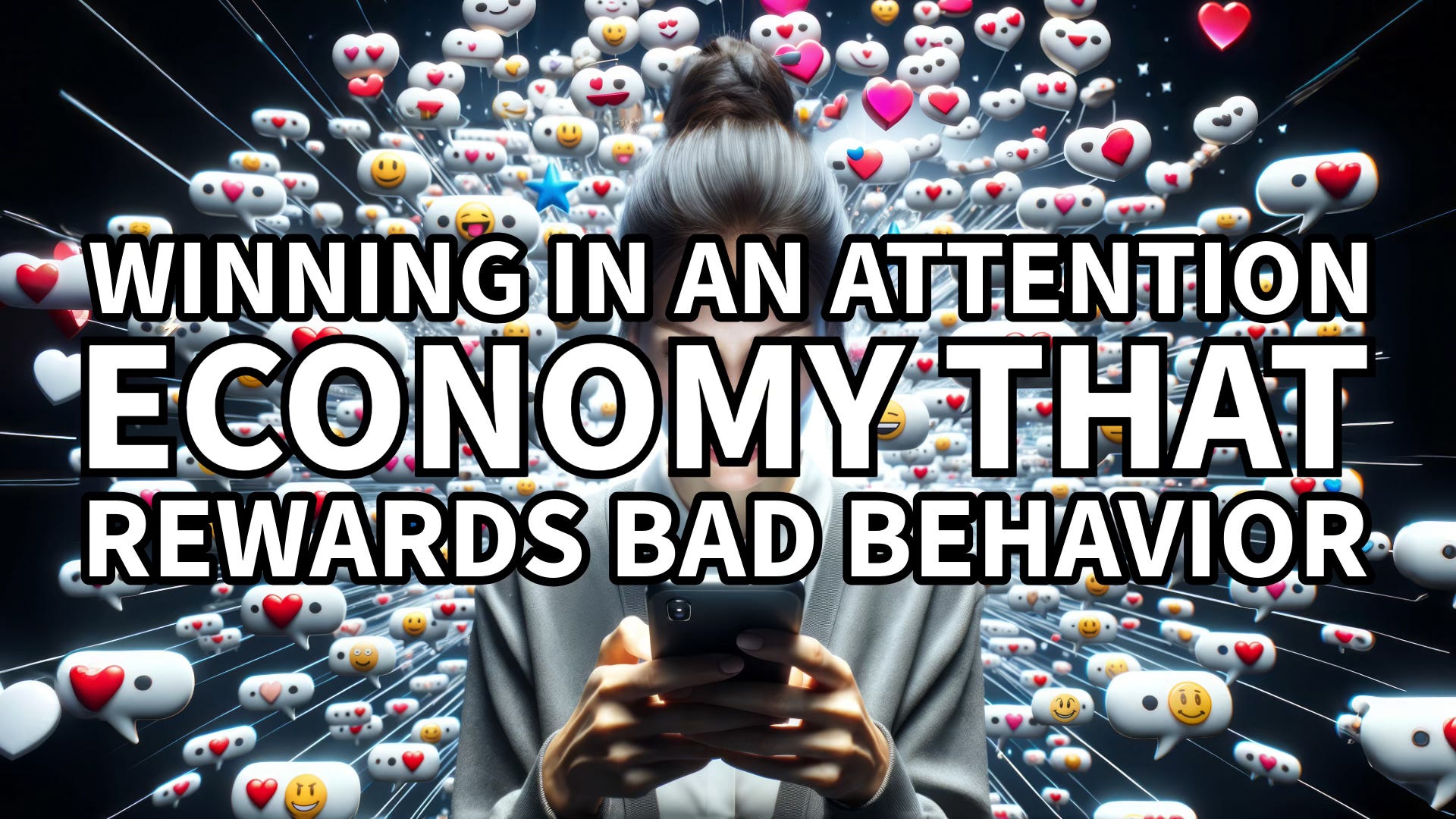
Let’s open with what we’re all seeing… and pretending not to notice.
A woman goes viral for saying women over 160 pounds should basically shut up and chain themselves to a treadmill. A wave of red-pill content racks up millions of views telling men that empathy is weakness and women are the enemy. And just this week, James Charles publicly humiliated a woman who lost her job and asked for help, calling her lazy in a now-deleted rant that sparked backlash across the internet. Do we really think these influencers are not 100% aware of what they are doing? Hardly.
This is not random.
This is the business model.
Welcome to the attention economy, where the loudest voice wins, the harshest take travels fastest, and your nervous system is the product.
Why This Content Keeps Winning
The uncomfortable truth is that outrage performs better than wisdom.
Platforms are not built to elevate truth, nuance, or healing. They are built to maximize engagement. And engagement is most easily triggered by three things:
Fear
Anger
Superiority
That’s why extreme takes go viral. That’s why “you’re doing life wrong” content spreads like wildfire. That’s why people are rewarded for being provocative, not necessarily for being right.
Research even shows that modern media has adapted to shorter, more stimulating formats to compete for attention, constantly increasing intensity to keep us engaged.
In other words, the system is literally evolving to hijack your focus.
What This Does to the Mind
Your brain was not designed for this.
When you scroll through constant outrage, your mind shifts into a low-level stress state. You may not even notice it at first, but over time it shows up as:
Shorter attention span
Increased anxiety
Constant comparison
Emotional reactivity
You are not just consuming content. You are training your brain to expect stimulation, conflict, and judgment.
And eventually, peace starts to feel… boring.
What This Does to the Body
The body keeps score.
Every time you engage with content that triggers anger or fear, your nervous system responds as if something real is happening to you.
Stress hormones rise. Your body tightens. Your baseline shifts.
Now imagine doing that 50 times a day.
This is why people feel exhausted after “doing nothing” but scrolling.
You didn’t do nothing.
You went to war with the internet.
A new episode of SoulTech with Cynthia just dropped! My special guest is renowned spiritual leader, Masati. We talk near death experiences, the spiritual journey and so much more. Listen on Apple, Spotify & YouTube.
What This Does to the Soul
This is the part no one is talking about.
The attention economy rewards disconnection from truth.
It rewards:
Performing instead of being
Reacting instead of reflecting
Judging instead of understanding
Over time, it pulls you away from your center.
You stop asking, What is true for me?
And start asking, What will get attention?
That’s where people lose themselves.
The Dark Shortcut to Success
Let’s be honest about something.
The “negative path” often works.
Rage bait grows fast.
Shock content spreads fast.
Division builds audiences quickly.
There is a reason people use it.
But there is also a cost.
Creators who build on outrage often become trapped by it. They have to escalate to stay relevant. Louder. Harsher. More extreme.
And eventually, the brand becomes the behavior.
You don’t just post chaos.
You become it.
So How Do You Win in the Attention Economy Without Losing Yourself?
This is the real question.
Because opting out completely is not realistic. We live here. We build here. We grow businesses here.
But you can play the game without letting it play you.
1. Train Your Attention Like It Matters (Because It Does)
Your attention is your currency.
Be intentional about what you consume:
If it spikes your stress instantly, limit it
If it leaves you feeling drained, question it
If it makes you more reactive than reflective, reduce it
Not all content deserves access to your mind.
2. Build Depth, Not Just Reach
Virality is not the same as value.
You can build a powerful platform by:
Teaching instead of triggering
Elevating instead of attacking
Creating insight instead of noise
It may grow slower. But it builds trust. And trust is what lasts.
3. Use Emotion Without Exploiting It
Emotion is not the enemy.
Manipulation is.
The difference:
Inspiration expands people
Fear contracts them
Rage divides them
You can create compelling content that moves people without tearing others down.
That is real influence.
Ready to learn the art and science of higher consciousness? Then you will want to pre-order my upcoming book: SoulTech: 12 Codes for Awakening Your Highest Self.
4. Don’t Confuse Volume With Truth
Just because something is everywhere doesn’t make it real.
Red-pill content, extreme takes, viral opinions… they often feel dominant because they are amplified.
But amplification is not the same as accuracy.
Stay grounded in your own thinking.
5. Protect Your Inner State Like It’s Sacred
Because it is.
Your peace, your clarity, your emotional stability… that is your edge.
In a world addicted to chaos, calm is power.
6. The Opportunity No One Is Talking About
Here’s the twist.
As the noise gets louder, truth becomes more valuable.
As the content gets more extreme, authenticity stands out.
As people burn out on outrage, they start craving something real.
This is where you win.
Not by being the loudest voice in the room.
But by being the clearest.
Final Thought
The attention economy is not going anywhere.
But neither is your ability to choose how you show up inside it.
You can chase attention.
Or you can build something that actually matters.
One burns fast.
The other builds a legacy.
Choose wisely.
Wishing you an amazing week.
With love,
Cynthia


